Media Summary: Space isn't 2D! Track proper motions, distances, and Earth locations natively in Curve fitting done right. Tie models to parameter bounds and fit data flawlessly with Why settle for a single Gaussian? Combine models with arithmetic operators to build complex physical profiles in
Astropy Python For Astronomy 4 - Detailed Analysis & Overview
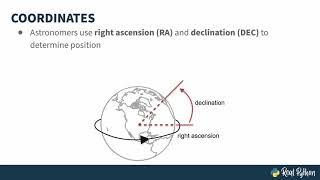
Space isn't 2D! Track proper motions, distances, and Earth locations natively in Curve fitting done right. Tie models to parameter bounds and fit data flawlessly with Why settle for a single Gaussian? Combine models with arithmetic operators to build complex physical profiles in Translating Right Ascension and Declination to Galactic coordinates is a one-liner in This short webinar introduces the structure and core functionalities of Time is relative, especially in astrophysics. Master UTC, TAI, and TDB time scales with
Originally broadcast on October 7, 2023. In this How-To webinar, Dr. Matt Craig showed how you can leverage the power of ... This is a preview of the video course, "Using This is the first in a series of videos where I will be teaching you how to use Calculate the age of the universe, lookback times, and luminosity distances with a few keystrokes in A raw numpy array isn't enough for telescope data. Bundle masks, WCS, and uncertainties directly into How do you know where pixel [30, 40] actually points in the sky? Enter the World Coordinate System (WCS) in
Uh there's a quick question in the in the chat though says uh since